
Writing Exercise: Engineering Your Character by Khanh Ho
Welcome to new guest columnist Khanh Ho, associate English professor. In this article, he offers useful tools and techniques for creating stronger characters.
***
I know my boyfriend is downloading internet porn with our rent money. I’m afraid that my mother-in-law thinks I’m low class because she suspects her son is not the real father. How can I tell my best friend that she needs to pay her fair share when we go out?
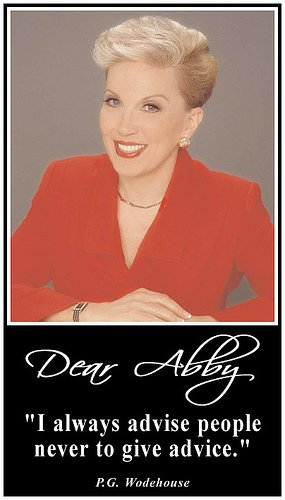
Who hasn’t had a delicate question that burned to be asked? Who hasn’t been ashamed to do so? For many years, Dear Abby was at the center of American consciousness and she fielded all sorts of questions—from etiquette to morality to good taste—that baffled us in this modern American world that was constantly changing, morphing, evolving.
This exercise forces you to think of character and, through the back door, moves you into plot. It’s simple, really. All you need to do is think about a burning question that your character—major or minor—needs to ask. What embarrasses them? What causes their lives to feel empty—unfulfilled? What do they want revenge for? What are they too afraid to ask of their lovers, friends, family?
You got it? If you haven’t been thinking of these things, than you’re probably not thinking very deeply about your character. This exercise, then, is an exercise of engineering; it’s putting all the stuff into the character that will allow him to appear fully realized.
Now, here’s the kicker. Write a letter to Dear Abby. You know the form of the Dear Abby letter—short and sweet and direct—explaining the problem and seeking advice. Try to see if you can get the voice of the character in a missive that paradoxically is supposed to be cut and dry (i.e. boring) and also interesting. Kind of hard!
Here: I’ll give you an example. I’m writing a mystery novel about a guy who’s a deliveryman in the garment industry of LA. He’s kind of a loser—an alcoholic who graduated Columbia University—who has been paralyzed by his addiction, ever since his own sister was murdered five years previously. The novel opens up with the murder of a girl—a one night stand—who works in one of the design studios he makes deliveries to. As the novel progresses, it becomes clear that there’s a serial killer out there, mutilating the beautiful young things who work in LA’s fashion industry. Now, Robert is compelled to find the killer in memory of the girl he once had sex with and the girl he loved and will never forget—his sister.
Dear Abby,
Ever since my sister died, I’ve been wanting to get revenge on the world and been taking it out on myself. I know that this is unhealthy. And this alcoholism thing has been damaging my liver but I can’t see my way out. Part of me says I should try to get into therapy but the other part says that I’m not really hurting anyone. Is it okay if I’m not hurting anyone?
Yours,
Counting Empties in Los Angeles County
The final thing that you should realize about writing this small exercise is that engineering character also leads to engineering action. If you write this—it’s short so write it good!—you should begin to divine the main conflicts. You’ll also see the crisis. And you’re gonna get a front row seat for the major plot points. So, get your pen out and get ready to spill your guts.
***
 ABOUT THE AUTHOR: Khanh Ho spent many years living in a small town in rural Iowa, teaching Creative Writing at Grinnell College—a small liberal arts college, nestled in a windswept prairie whose distinguishing feature is the presence of a Super Walmart. But then he had a light bulb epiphany: he’ll never produce writing if he persists in teaching it. So, now he is happily pounding away at the keyboard, knocking out not only his first mystery novel but, also, the first mystery novel featuring the first Vietnamese American detective. Why? Because, yes, he’ll be the first; yes, it’ll be a power trip; and yes, because he can! Follow him on his great adventure at www.losangelesmystery.com.


I’ve always wanted to write. I had a real talent for it in school but I’m not sure I still do. What I do have is very active imagination, I can still create whole worlds in my mind with such detail that they feel real. Now to get that on paper is an entirely different thing.
Well you can do it. It’s all just baby steps. So, try out this exercise and you’ll see how it opens up into others. This exercise has had such raves since I developed it that I’ve been invited to teach it at UC Irvine this Saturday. Why? Because it will open up the story for you!
Bethany, I love your tagline! And your website. Is Khann Ho a guest poster or were you just quoting? Great post! I can always use good ways to get the creative juices flowing!
Love the idea of developing a character via a letter to an agony aunt!
Thanks, Jo. In answer to your question: I’m a guest poster. But you can check out my website for more exercises.
Another advantage of this exercise is that it forces you to write tight. You have to share in the character’s voice but also in focused, concise, language.
Great exercise! Thanks, Khanh. I do Tarot readings for characters. I love your creativity with this. 😀
Thanks Kathy and Arwen. Arwen, Tarot cards sound awesome as an idea. Kathy, you totally got the point of the exercise–compression. At UCI this weekend, I’ll be sharing the stage with a poet who is going to have everybody write haikus. I’m tempted to make the exercise even harder and make the people in my workshop write Dear Abby letters in haiku form.
What do you think? Too hard for college students?
Dear Abby – what an ingenious idea. Thanks for sharing!
Khanh, I think you should offer “extra credit” to those who write Dear Abby letters in haiku format!
Jo, Glad you love my tagline. I was thinking of changing it but you’re the second person recently who raved about it. Khanh is a guest poster; isn’t his writing exercise fun! I’m sure if you write your own Dear Abby in the voice of your character that you’ll get the creative juices flowing!
Erica, If you want to, you can get your detailed whole worlds on paper. Start small. The author and writing teacher, Anne Lamott, encourages us in her book, BIRD BY BIRD, to write what we can see in a 1-inch frame. In other words, start small.